

A duvet insert, also known as a comforter or quilt, is what you put inside a duvet cover to provide warmth and comfort while you sleep. The insert acts as the filling, while the cover serves as a protective, washable shell for your bedding. You should choose an insert that matches the exact dimensions of your cover to ensure it stays flat and doesn’t bunch up inside the fabric during the night.
Choosing what goes inside your duvet cover
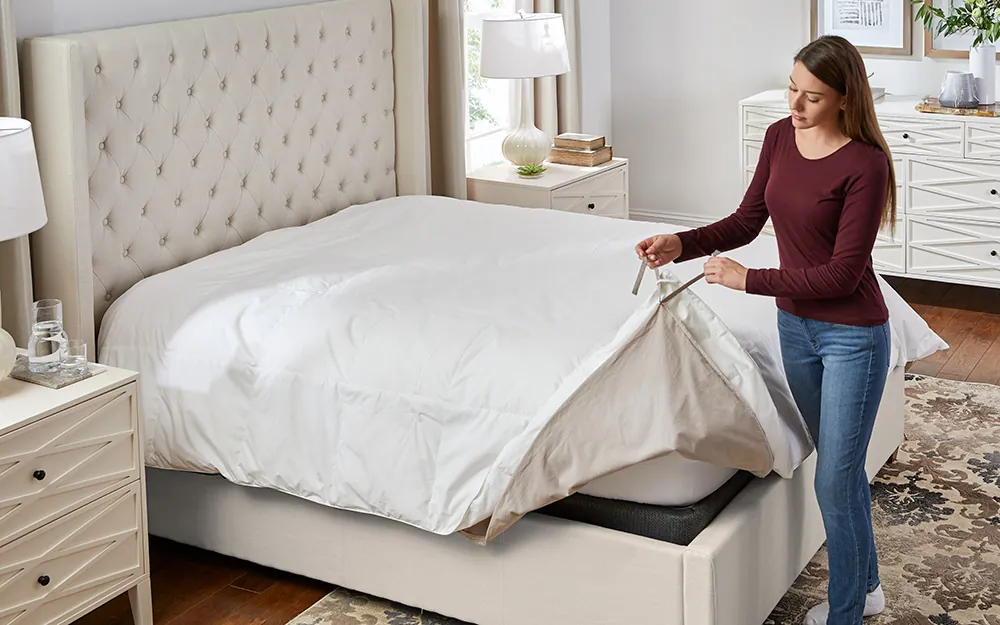
Match the insert size exactly to your cover size, such as Twin, Full, Queen, or King, to prevent shifting. If you find your duvet bunching at the bottom, your insert is likely too small for the shell. A gap of more than two inches between the edge of the insert and the seam of the cover guarantees the insert will collapse into a ball overnight.
Check the corner loops on your insert and the ties inside your cover. If they align, secure them with a double knot to keep the insert centered. If your insert lacks loops, you can use duvet clips or safety pins to anchor the corners. Don’t skip this step; without these anchors, the weight of the fabric will pull the insert downward, leaving you with a flat, empty cover at the top of your bed.
Wash the duvet cover every 1–2 weeks, but keep the insert clean by using a cover to prevent dust and skin oils from reaching it. If the insert feels too hot, look for breathable materials like cotton or bamboo instead of heavy down or synthetic polyester fills. If you wake up sweating, switch to a wool-filled insert, which regulates body temperature more effectively than down in humid climates.
Why Bedding Inserts Need Proper Covers
The primary reason to use a cover is to extend the life of your bedding insert by acting as a barrier against daily wear. Duvet inserts are often made of delicate materials like goose down or fine wool that are difficult to clean in a standard home washing machine. Washing a down comforter too frequently causes the feathers to clump, stripping them of the natural oils that keep them lofty and warm.
A protective cover absorbs the oils, sweat, and dead skin cells that would otherwise penetrate the delicate baffle-box construction of the insert.
Beyond protection, the cover allows you to change the aesthetic of your bedroom without replacing the expensive insert. You can swap a heavy, warm winter cover for a lighter, decorative one during the summer months. This modular approach saves money and storage space, as you only need one high-quality insert that works for all four seasons.
The mechanism of the insert depends on its fill power and material. High-fill power down provides excellent insulation with very little weight, while synthetic fibers offer a hypoallergenic alternative at a lower cost. If you notice your insert is sliding inside the cover, it’s usually because the two items aren’t sized correctly or the internal attachment points are missing.
Always check for corner ties or loops on both the cover and the insert. If your insert lacks these loops, you can sew small fabric ribbons to the corners to anchor it to the cover’s interior. This simple step prevents the fill from bunching at the foot of the bed, ensuring even warmth throughout the night.
Adjusting for Different Bedding Needs
| Situation | What changes | What to do instead |
|---|---|---|
| Extra cold bedroom | Thicker fill material | Use a high-tog down insert |
| Sensitive skin | Fill type | Use hypoallergenic synthetic fiber |
| Small washing machine | Insert size | Use two smaller twin inserts |
| Slipping insert | Attachment method | Use internal corner tie clips |
| Hot sleeper | Material breathability | Choose cotton or silk shells |
If your bedroom dips below 60 degrees Fahrenheit, a standard duvet will fail to retain your body heat. Look for a fill power of 700 or higher to ensure the down clusters are dense enough to create a thermal barrier.
For sensitive skin, avoid wool or cheap polyester blends that trap moisture and harbor dust mites. Instead, seek out bamboo or organic cotton shells, which prevent the skin irritation caused by chemical dyes and synthetic fibers.
When using two twin inserts to accommodate a small washing machine, you must bridge the gap in the center. Use a duvet cover with internal loops at the midpoints of the sides, not just the corners. Without these mid-side anchors, the inserts will drift, leaving you with a cold, hollow space down the middle of your bed.
If you struggle with night sweats, ignore the thread count. A high thread count often indicates a tighter weave that blocks airflow. Prioritize a percale weave, which uses a one-over-one-under pattern to maximize ventilation.
How to Insert a Duvet Properly
Lay your duvet cover flat on the bed with the opening facing toward the foot of the mattress. Turn the cover inside out so the internal ties are visible.
Place your duvet insert on top of the inside-out cover, aligning the corners of the insert with the top corners of the cover. If your items have ties, secure the corners of the insert to the corresponding loops using a double knot. A single knot will inevitably slip loose within a week, forcing you to repeat this entire process.
Reach inside the cover to grab the top two corners of the insert and pull the cover right-side out over the insert. This “burrito roll” method is the industry standard for a reason. If you struggle with heavy king-sized inserts, roll the insert and cover together like a sleeping bag before turning them inside out. This prevents the fabric from bunching at the shoulders.
Shake the cover gently from the top corners until the insert falls into place and fills the fabric evenly. If the insert remains lopsided, don’t pull from the center. Instead, hold the top corners firmly and snap the fabric downward like cracking a whip.
Tuck the remaining part of the insert into the bottom of the cover and close the buttons or zipper. If your cover lacks ties, use small safety pins or duvet clips to anchor the top corners. Without these, the insert will migrate to the bottom of the cover overnight, leaving you with a hollow, empty shell at the top.
Common Mistakes That Ruin Your Bedding
Ignoring the corner ties leads to the insert bunching up in one corner, which creates cold spots and ruins your comfort. Always knot these ribbons firmly against the internal loops of the duvet cover. If your cover lacks ties, use small safety pins or specialized bedding clips to secure the corners.
Using an insert that’s smaller than the cover causes the fabric to sag and look messy, as the cover will have empty, floppy edges. Aim for an insert that matches the dimensions of your cover as closely as possible. This ensures a crisp, hotel-style aesthetic.
Stuffing a large insert into a small cover can damage the zipper or buttons, often leading to a broken closure after only a few uses. If the insert resists sliding in easily, stop immediately. You’re likely forcing a king-sized insert into a queen-sized shell.
Washing the insert too frequently instead of the cover wears out the internal stitching, which causes the fill to clump together permanently. Spot-clean minor stains and use a protective cover at all times. Limit deep cleaning to once every six months to preserve the loft.
Frequently asked questions
Can I use a comforter inside a duvet cover?
You can use a comforter as an insert, but it’s often unnecessary because comforters are designed to be used as standalone bedding. If you choose to do this, ensure the comforter is flat and doesn’t have thick decorative ruffles, as these will create uncomfortable lumps inside the cover. A standard, flat-edged comforter works best if you want to change your bedroom style without buying a new, separate duvet insert.
How long does a duvet insert last?
A high-quality down duvet insert can last for many years if it’s kept inside a protective cover and cleaned properly. Synthetic inserts generally have a shorter lifespan before the fibers begin to lose their loft and ability to trap heat. You’ll know it’s time to replace your insert when the filling no longer springs back after you fluff it or if you notice cold spots.
Is it safe to wash a duvet insert?
Most inserts are safe to wash, but you must check the care label first to confirm material requirements. Down inserts often require professional cleaning or specific low-heat drying to prevent clumping, while synthetic inserts usually handle standard home washing. Always ensure the insert is completely dry before use to prevent mold.
What happens if the insert is too big?
If your insert is too big for the cover, the fabric will bunch and wrinkle, which makes the bed look unmade and prevents the insert from laying flat. This extra material also creates heat pockets that can make you feel uncomfortable or overheated during the night. You should always measure your cover’s interior width and length before purchasing an insert to avoid this sizing mismatch.
Does it matter if the insert doesn’t have loops?
You can secure an insert that lacks loops by using internal duvet clips or sewing small ribbons onto the corners. These clips attach to the inside corners of the bedding to hold the insert in place and prevent shifting. Without a securing method, you’ll need to fluff your duvet daily.
How do I stop the duvet from moving?
You can stop a duvet from moving by using corner ties, clips, or safety pins to anchor the insert to the cover. These tools create a physical connection that forces the insert and cover to move as one unit. This prevents the insert from bunching up inside the duvet cover.
Conclusion
Using the right insert inside your cover is the easiest way to ensure a comfortable night of sleep. By matching sizes and using the internal ties, you keep your bed looking neat and feeling warm throughout the year.