
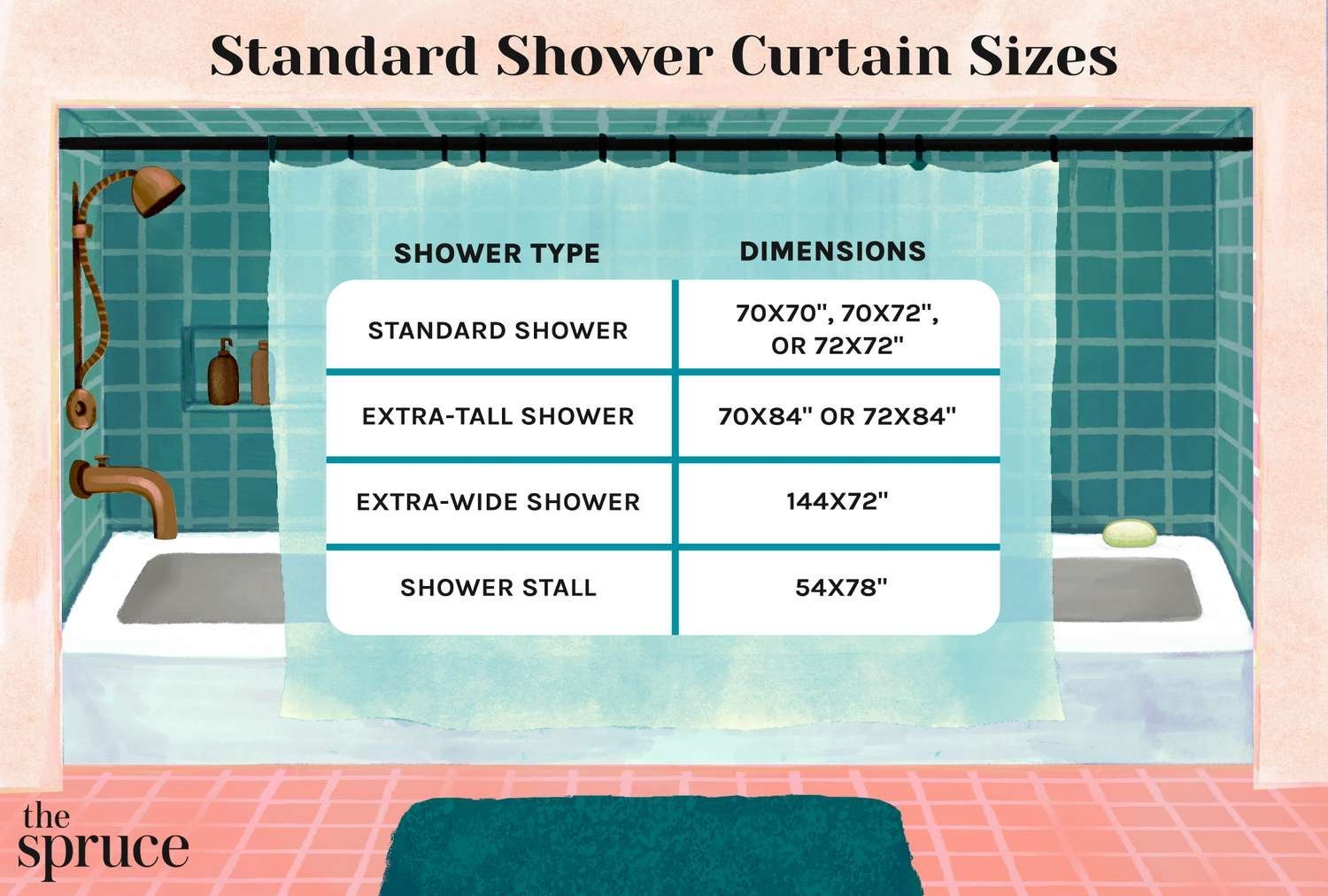
Standard shower curtains measure 72 inches wide by 72 inches long, though the ideal size depends on your specific tub or enclosure. This square shape fits a standard alcove tub with enough fabric to tuck the edges inside. For walk-in showers or high ceilings, you must adjust these dimensions to keep water contained.
Quick Guide to Choosing Your Size

Standard Tub: 72 inches wide by 72 inches long is the most common size found in retail stores. This dimension fits the vast majority of alcove-style tubs where the curtain hangs within the footprint of the ledge.
Extra-Long: 72 inches wide by 84 inches long works best for showers with higher rods or ceiling-mounted hardware. If your rod sits more than 75 inches from the floor, a standard curtain will leave a gap that invites water onto your floor.
Extra-Wide: 108 inches wide by 72 inches long is the right choice for wide walk-in showers or clawfoot tubs. These curtains prevent the common mistake of bunching the fabric too tightly, which traps moisture and accelerates mold growth in the folds.
Shower Stall: 54 inches wide by 78 inches long is the typical size for smaller, square-shaped shower stalls. Measure your stall opening carefully; if your enclosure is wider than 48 inches, upgrade to a standard size to ensure the fabric hangs flat.
Coverage Rule: Add 6 to 12 inches to the width of your shower opening to allow for proper folds and coverage. If you have a curved shower rod, always lean toward the 12-inch buffer. A curtain that pulls taut across the rod will eventually tear at the grommets, costing you the price of a full replacement within months.
Why Dimensions Matter for Your Bathroom
The primary reason for specific dimensions is to prevent water from escaping the wet area. When a curtain is too narrow, it can’t overlap the sides of the tub, which leads to water leaking onto your floor. A curtain that’s too short allows water to splash over the bottom edge, while one that’s too long pools on the floor and collects mildew. Keeping your bathroom floor dry is essential to preventing slips and falls.
The mechanism relies on the relationship between your rod height and the tub rim. If you install your shower rod higher than the standard 75 inches from the floor, a 72-inch curtain will hang too high and let water escape. You must measure the distance from your rod to the floor or tub rim before you buy. If you’re using a liner and a decorative curtain, both should be the same size to hang correctly.
Most people make the mistake of measuring only the tub width, forgetting the depth of the shower arc. If your rod is curved, you need a curtain at least 6 to 10 inches wider than a standard flat rod setup to ensure full coverage. Without this extra material, the curtain will pull away from the walls at the corners, leaving gaps for spray to hit the drywall.
If you have a custom-built enclosure, standard sizes rarely fit. In these cases, you should look for custom-made options or use multiple panels to get the width you need. If you encounter a gap, check the tension of your rings. If the curtain hangs more than 2 inches above the tub floor, water will inevitably track along the liner and drip outside.
Measure from the rod down to the floor, then subtract 2 inches to find your ideal curtain length. This gap prevents the fabric from soaking up standing water while remaining low enough to block spray. If your space is wider than 60 inches, use two liners instead of one to ensure you can overlap the center by at least 4 inches.
When Your Shower Needs a Different Size
The standard 72-inch square shower curtain often fails to account for architectural quirks. A curtain that hangs too high invites water onto your floor, while one that drags on the tile invites mold.
If your rod sits higher than 78 inches from the floor, a standard curtain will leave a gap that allows spray to escape. Switch to 84-inch extra-long curtains to maintain a proper seal. If you have a walk-in shower, don’t try to stretch a single liner across the span. Use two standard 72-inch curtains overlapped by four inches in the center to prevent leaks.
Small stalls require a 54-inch wide curtain to avoid excessive bunching. Excess fabric creates deep folds that trap moisture and accelerate mildew growth. If you’re working with a clawfoot tub, you need a 108-inch wide curtain to wrap around the circular rod completely.
Check your rod height before you purchase. If the rod sits lower than 70 inches, you must hem the bottom edge of your curtain. Leaving the fabric to puddle on the floor ruins the material and creates a slip hazard.
If the curtain touches the floor, you have already lost the battle against grime. Trim the bottom two inches above the floor to ensure the material stays dry between uses. Always measure from the rod rings to the floor, not from the top of the wall.
How to Install Your Shower Curtain Properly
Measure the width of your shower opening from wall to wall using a tape measure. If your rod is installed inside a recessed alcove, measure at the narrowest point to avoid binding.
Add 10 inches to your measured width to ensure the fabric has enough slack for elegant folds. Without this extra width, the curtain will pull taut like a flat sheet, creating gaps at the edges where water will inevitably spray onto your bathroom floor.
Measure the height from the shower rod to the floor or the top of your tub rim. Subtract 2 inches from that height measurement if you want the curtain to hang just above the floor. If you’re using a liner inside a tub, subtract 6 inches instead to prevent the bottom edge from collecting mildew in standing water.
Slide your shower curtain rings through the grommets on the top of the curtain fabric. Always place the liner on the same hooks as the decorative curtain, keeping the liner facing inward toward the tub.
Attach the rings to the shower rod, starting from one end and moving to the other. If your rod is a tension style, ensure the rings move freely over the center seam; a snagged ring often causes the rod to shift or collapse under pressure.
Check that the curtain overlaps the tub edges on both sides to confirm it’s sealed. If you see a gap, your curtain is too narrow or your rod is mounted too high. Adjust the rod height immediately to prevent water damage to your subfloor.
Common Mistakes That Ruin Your Setup
Buying a curtain that matches the exact width of your opening creates unsightly gaps. Aim for a curtain width 1.5 times the span of your tub to ensure proper folds and coverage.
Installing the rod too high causes the curtain to hover above the tub rim, inviting water to splash onto your floor. Mount the rod so the curtain hem sits at least two inches inside the tub.
Using a liner longer than your decorative curtain makes the plastic visible and messy. If your liner drags on the floor, trim the bottom edge with sharp shears to match the curtain length exactly.
Forgetting to account for the arc of a curved rod makes the fabric look stretched and thin. Add an extra panel if you use a curved rod, or the tension will pull the fabric taut and ruin the drape.
Most people ignore the weight of the fabric when choosing rings. If you use heavy canvas, switch to double-hook rings to distribute the load. Lightweight plastic rings will snap under the tension of a wet, heavy curtain, causing the fabric to sag unevenly.
Frequently asked questions
How long should a shower curtain be?
A shower curtain should be long enough to hang about 1 to 2 inches inside the tub to prevent water from splashing out. For a standard tub, 72 inches is the correct length for a rod placed 75 inches from the floor. If your rod is mounted higher, you should measure from the rod to the tub rim and add 2 inches to ensure proper coverage.
Does the curtain width matter for a small shower?
Yes, a curtain that’s too wide for a small stall will bunch up and create heavy folds that trap moisture. You should choose a 54-inch wide curtain for a standard 36-inch stall to ensure it fits without being overly bulky. If you use a 72-inch wide curtain in a tiny stall, the extra fabric will hold too much water and slow down the drying process.
Can I use a standard curtain for a clawfoot tub?
No, a standard 72-inch wide curtain is usually not wide enough to wrap around the entire perimeter of a clawfoot tub. You typically need a 108-inch wide curtain or multiple standard panels to cover all sides. Check the circumference of your tub’s ring, then add 12 inches to that number to find the total width of fabric you need to stay dry.
What happens if the curtain is too short?
Water will splash over the edge of the tub or shower stall and create a puddle on your floor. This is a common issue when people mount their shower rods higher than 75 inches without buying extra-long curtains. If you notice water on the floor, you should move your rod down or buy an 84-inch long curtain to fill the gap.
Is it safe to use a curtain that touches the floor?
It isn’t recommended because the fabric will soak up water and become a breeding ground for mold and mildew. You should aim for the curtain to hang about 1 inch above the floor in a walk-in shower or 2 inches inside the tub. If your curtain is dragging on the floor, you can hem the bottom edge using fabric glue or a sewing machine.
How do I measure a curved shower rod?
Measure the distance between walls along the rod’s curve using a flexible tape measure. Because the arc adds length, a standard 72-inch curtain may not provide full coverage. We recommend adding 15 percent to your measured width to ensure the curtain properly spans the entire curved path.
Conclusion
Before you head to the store, grab a tape measure and check your space one more time. It’s worth double-checking your measurements because you don’t want to deal with a return later. Once you’ve picked the perfect fit, you’ll be ready to enjoy a dry, tidy bathroom that feels brand new.