
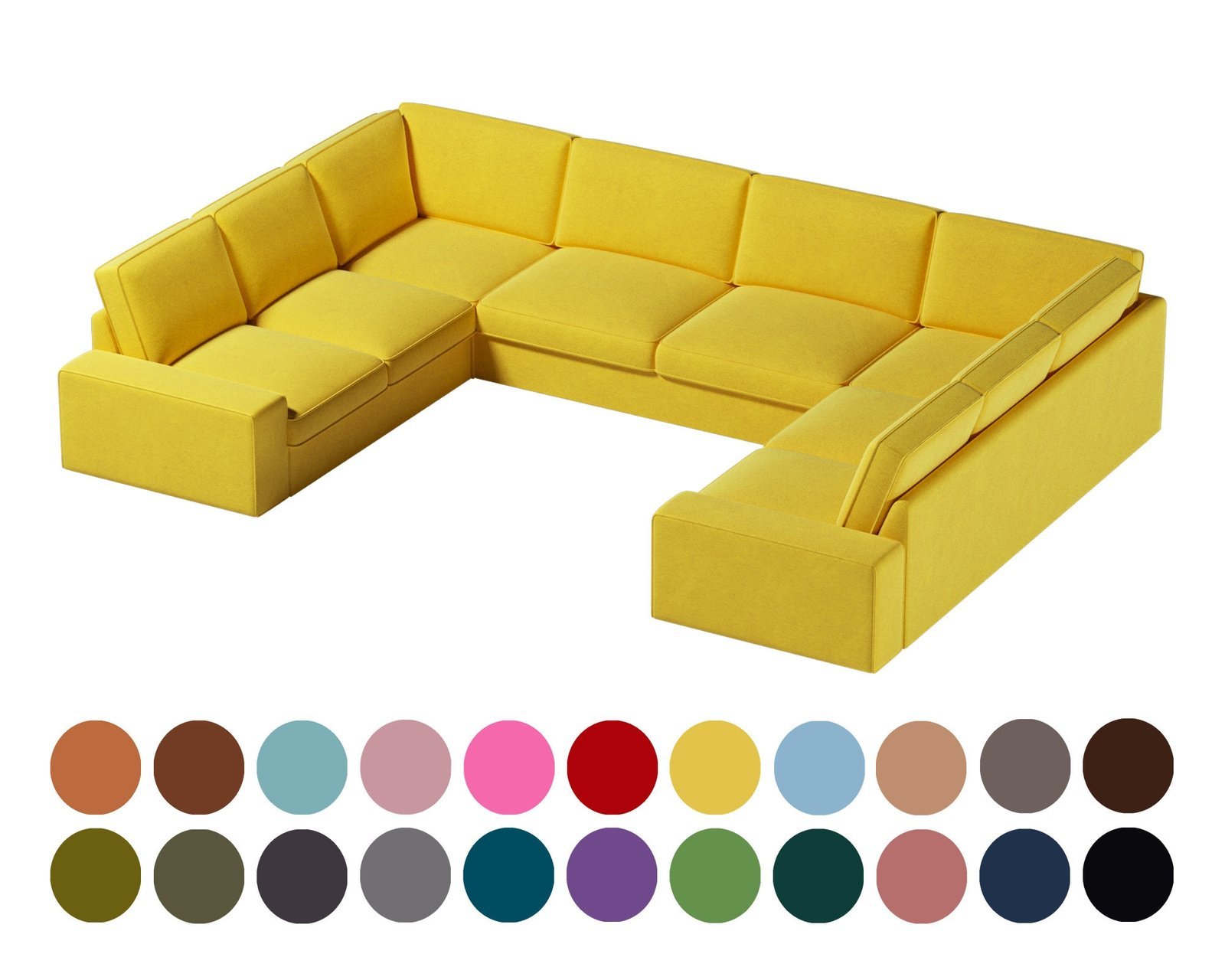
Fitting u shaped sofa covers to your furniture requires measuring the three distinct sections of your sofa and choosing a multi-piece set that accommodates the unique corner angles. These covers protect your fabric from daily wear, pet hair, and spills while offering a quick way to change your room’s color scheme. This guide covers how to select the right material, calculate dimensions for a snug fit, and secure the fabric to prevent sliding during use.
Understanding sofa slipcover design

A slipcover for a large sectional is usually sold as a set of individual pieces rather than one giant sheet. This modular design is necessary because a U-shaped sofa has two corners and three main seating areas that can’t be covered by a single flat piece of fabric. These covers are intended for people who want to refresh an older sofa without buying a new one or for those who need to protect new furniture from children and pets.
The biggest misconception is that one size fits all sofas of the same length. In reality, sofa frames vary in depth, arm height, and cushion thickness. A professional fit depends on the fabric’s elasticity; most quality covers use a blend of polyester and spandex to ensure the material stretches over the cushions while staying taut against the frame.
How to measure and install your covers
To get a professional look, you must measure your sofa carefully before buying your covers. Measure the total length of the back, the depth of the seats, and the height of the arms. If you have a left-facing or right-facing chaise, note that these require specific corner pieces that aren’t interchangeable.
- Remove all loose cushions from the sofa frame.
- Drape the base cover over the main frame, starting from the center back and working toward the arms.
- Tuck the excess fabric deep into the crevices between the seat and the arms to create a clean line.
- Use foam rollers or plastic tucking tools to push the fabric into the gaps, which prevents the cover from popping out when you sit down.
- Pull the individual seat covers over each cushion, zipping them closed if your model includes fasteners.
- Smooth the fabric across the surface to remove wrinkles and adjust the corners so they align with the sofa’s frame.
If you choose a cover that’s too small, the fabric will tear at the seams when you stretch it. If the cover is too large, it will look baggy and require constant tucking. If you have a high-end sofa with delicate wood trim, avoid covers with heavy elastic bands that might scratch the finish; use fabric-only covers instead.
Necessary dimensions and settings
The following table helps you match your sofa size to the typical cover requirements. These figures assume a standard seat depth of 36 inches; if your sofa is deeper, you’ll need a larger size to account for the extra fabric.
| Sofa Section | Measurement to Check | Recommended Stretch | What to Watch For |
|---|---|---|---|
| Main Back | Total length in inches | 10-15% | Sagging in the center |
| Corner Pieces | 90-degree angle fit | 20% | Bunching at the inner corner |
| Seat Cushions | Depth and width | 10% | Gap between cushions |
| Armrests | Height and width | 15-20% | Over-stretching the seams |
| Overall Frame | Height from floor | 5% | Fabric dragging on floor |
Achieving a professional finish
Experienced users focus on the tension of the fabric during installation. If the cover is too loose, it will look sloppy within minutes of use. Use upholstery pins or specialized clips to secure the fabric to the underside of the frame. This step prevents the cover from shifting when people stand up or sit down.
Always align the seams of the cover with the seams of the sofa. If you start by aligning the center-back seam, the rest of the cover will naturally follow the shape of the furniture. If you find the fabric is still loose, add extra foam grip strips into the deepest parts of the seating area. Beginners often skip the tucking process, which costs them time later because they have to reset the cover every single day.
Troubleshooting common fit issues
If your cover looks messy or slides off, check the table below to find the likely cause and the immediate fix.
| What you notice | What it usually means | What to do first |
|---|---|---|
| Fabric slides out | Not enough tucking | Add more foam grip strips |
| Baggy corners | Size is too large | Use safety pins to tighten |
| Seams pulling apart | Tension is too high | Loosen the elastic straps |
| Wrinkles on seat | Fabric is too thin | Steam the cover lightly |
Most people make the mistake of pulling the fabric until it’s taut across the entire frame. This creates excessive stress on the stitching. If you hear a popping sound while sitting, immediately release the tension by two inches.
If you have a recliner, ensure the back flap is tucked at least six inches deep into the crevice. Without this depth, the fabric will inevitably migrate upward when the chair moves. Use a flat ruler to push the material deep into the gap.
Rules for furniture protection
Most manufacturers suggest that you wash your covers every 3 to 6 months to maintain the integrity of the elastic fibers. If you use a cover with a waterproof coating, follow the care label strictly. High heat in a dryer can melt the protective layer, permanently ruining the fabric’s performance.
If you have a leather sofa, be aware that heavy-duty covers often trap moisture. This trapped condensation causes leather to crack or mildew within a single season. In this case, choose a breathable cotton-blend cover instead of a synthetic polyester one.
If the cover requires professional cleaning, the label will specify “dry clean only.” Don’t attempt to machine wash these items. Even a cold cycle causes most treated fabrics to shrink by at least two inches, making it impossible to fit them back onto the frame.
Test your fabric’s colorfastness before the first wash by dabbing an inconspicuous corner with a damp white cloth. If any dye transfers to the cloth, skip the machine cycle entirely to avoid ruining your upholstery.
Maintaining your sofa covers
After you install the covers, regular maintenance keeps them looking new. Vacuum the surface weekly to remove dust and pet hair that can work its way into the weave of the fabric. If you notice a spill, spot-clean it immediately with a damp cloth and mild soap. Avoid scrubbing the fibers, as this pushes debris deeper into the backing.
If you have pets, consider adding a secondary throw blanket over the main seating area. This protects the cover from claws and heavy shedding. If the fabric feels tacky or attracts lint faster than usual, your cleaning agent may be leaving a residue; switch to a dry brush to lift surface dirt instead.
When the cover eventually loses its elasticity, which typically happens after 2 to 3 years of heavy use, you’ll notice that it no longer snaps back into place after you sit on it. At this point, the fabric has reached its fatigue limit. If the cover sags even after a wash and dry cycle, it’s time to replace it.
When to avoid using covers
Sometimes, a standard cover isn’t the right choice for your furniture. If your sofa has a unique shape, such as a recliner built into a U-shape or a non-removable headrest, a universal cover won’t fit correctly. In these cases, look for custom-made slipcovers that are tailored to your specific model.
If you have a designer sofa with intricate carvings or non-standard arm shapes, a cover will hide the features you likely paid a premium for. Instead of a full-frame cover, use individual seat cushions or throws to protect the most-used areas while leaving the decorative frame visible.
Avoid covers entirely if your upholstery is made of high-maintenance materials like velvet or silk. These fabrics require breathability to prevent pile crushing or permanent fiber matting. If you trap moisture or heat under a synthetic cover for more than 48 hours, you risk creating a permanent indentation in the fabric weave. If you must protect these pieces, use a breathable cotton sheet that allows air to circulate freely.
Frequently asked questions
Can I use a regular sofa cover on a U-shaped sofa?
No, a standard rectangular cover won’t fit a U-shaped sofa because it can’t wrap around the two corner sections. You must purchase a modular set that includes separate pieces for the corners and the individual seating sections to ensure the fabric sits flat against the frame.
How long do these covers typically last?
Most covers last for a period of time with daily use, depending on the fabric density and the amount of traffic the sofa receives. You’ll know it’s time to replace them when the elastic bands lose their tension and the fabric no longer stays tucked into the crevices.
Is it safe to machine wash these covers?
Yes, most polyester-blend covers are machine washable, but you must check the care label for specific temperature settings. Use a cold water cycle and air dry the covers to prevent the elastic fibers from shrinking or breaking down under high heat.
What happens if the cover is too small for my sofa?
If the cover is too small, the seams will likely tear under the pressure of the fabric being stretched to its limit. You should measure your sofa frame before buying and compare those numbers to the manufacturer’s size chart to ensure you have at least 10% slack for a proper fit.
How do I stop the cover from slipping?
You can stop the cover from slipping by using foam grip strips or upholstery pins to lock the fabric into the creases of the sofa. Placing these items deep into the gaps between the cushions and the frame creates the friction needed to hold the fabric in place during regular use.
Why does my cover look baggy after a few days?
Your cover looks baggy because the fabric hasn’t been tucked deep enough into the frame’s crevices. Use a flat, blunt tool to push the extra material deep into the sofa’s back and side gaps, which creates a tighter, more tailored appearance that stays in place longer.
Conclusion
Properly fitting your furniture with the right materials ensures that your living space stays clean and comfortable for years. By measuring accurately and using the correct anchoring methods, you can keep your sofa looking fresh regardless of how often it’s used.