

If you’re hauling gear, motorcycles, or lumber, you have likely encountered the frustration of tangled webbing and loose ends flapping in the wind. Investing in retractable ratchet straps can significantly streamline your workflow, offering a cleaner, more efficient way to secure your cargo. Depending on the brand, load capacity, and length of the webbing, you can expect to pay anywhere from $25 to $145 for a quality set or a single heavy-duty unit.
Key Takeaways
- Always verify the working load limit (WLL) of your straps before securing any heavy equipment or vehicles.
- Retractable mechanisms save time by eliminating the need to manually wind excess webbing after tightening.
- Inspect your straps for frayed edges or rust on the metal housing before every use to prevent catastrophic failure.
- Retractable units are best for light-to-medium duty tasks; for massive industrial loads, traditional heavy-duty straps are often preferred.
- Proper storage involves keeping the housing clean and dry to prevent the internal spring from seizing over time.
Why Choose Retractable Straps?
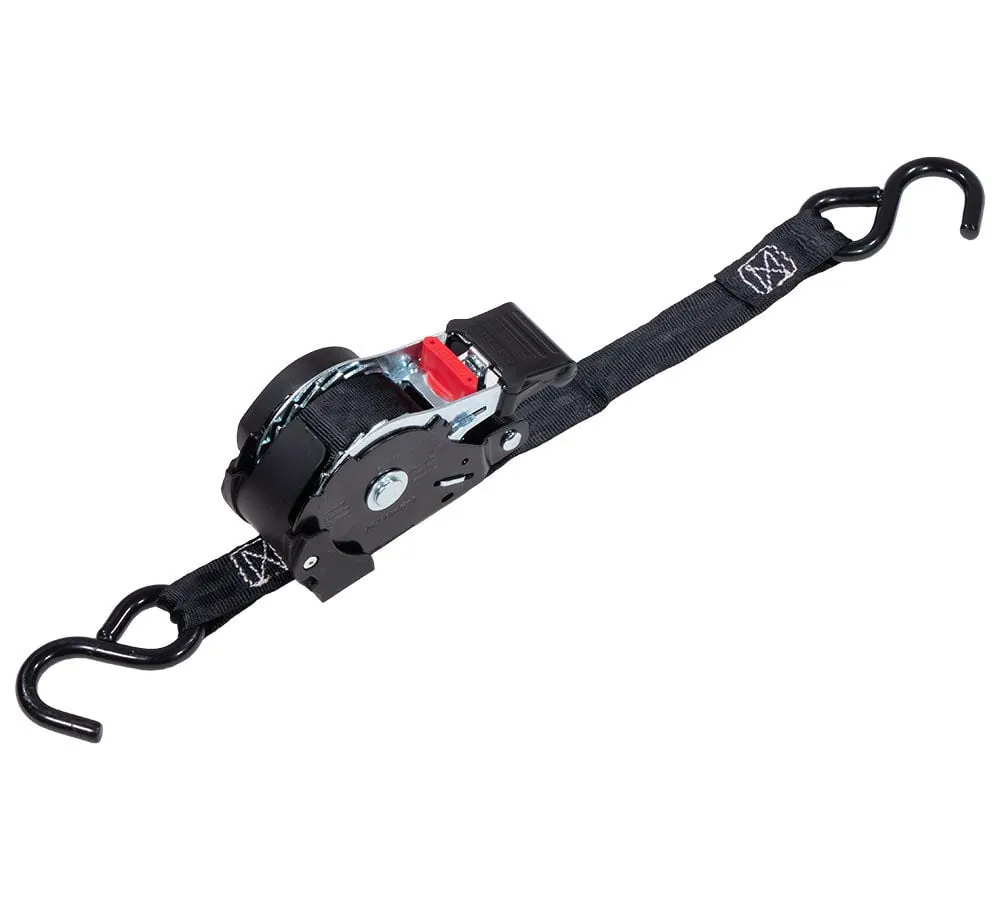
The primary advantage of these tools is the automated spooling system. Unlike standard ratchet straps, which require you to pull yards of loose webbing through the mandrel, these units pull the excess slack back into a protective housing.
This prevents the “spaghetti effect” where loose straps tangle during storage or whip around the side of your trailer while driving. Furthermore, the internal spring mechanism ensures that your strap stays organized, reducing the overall time spent strapping down a load by up to 50% compared to manual winding.
Understanding Working Load Limits
Safety is the most critical factor when using any tie-down system. The Federal Motor Carrier Safety Administration specifies that tie-down assemblies must be strong enough to withstand the forces encountered during transport, including sudden stops or sharp turns. You must match the strap’s capacity to the weight of your cargo. Never exceed the rated WLL, as this is the maximum weight the strap is designed to handle safely under normal conditions.
| Strap Type | Typical WLL Range (lbs) | Best Application |
|---|---|---|
| Light-Duty Retractable | 300 – 600 | Motorcycles, ATVs, coolers |
| Medium-Duty Retractable | 800 – 1,500 | Appliances, lumber, furniture |
| Heavy-Duty Retractable | 2,000 – 3,500 | Professional equipment, vehicles |
How to Use Them Effectively
Using these tools is intuitive, but following a consistent process ensures the mechanical longevity of the unit. First, attach the hooks to your anchor points. Pull the webbing out until it reaches your desired length, then hook the other end to your cargo. Use the ratcheting handle to tension the strap until it’s firm. When you’re ready to unload, release the ratchet lock, pull the release tab, and the strap will automatically retract into the housing.
Step-by-Step Securing Process
- Inspect the housing: Ensure the metal casing isn’t dented, as this can block the spring mechanism.
- Anchor the hooks: Connect the S-hooks or J-hooks to sturdy, frame-mounted tie-down points.
- Extend and connect: Pull the strap out just enough to cover the distance, avoiding excessive webbing pull-out if possible.
- Ratchet to tension: Tighten the handle until the load is secure, but don’t overtighten to the point of deforming the cargo.
- Lock the handle: Ensure the ratchet is fully locked in the closed position to prevent accidental loosening.
Common Brands and Options
The market offers several reliable manufacturers that focus on durability and ease of use. When shopping, prioritize brands that use corrosion-resistant coatings on their metal components to ensure the internal spring doesn’t rust after exposure to rain or road salt.
- SmartStraps: Known for their user-friendly, color-coded systems for different load weights.
- PowerTye: Often chosen by motorcycle enthusiasts for their specialized mounting hardware.
- Keeper: A widely available brand that offers a variety of retractable lengths, from 6-foot to 10-foot options.
- CargoBuckle: A professional-grade choice often permanently mounted to trailers for frequent hauling.
Troubleshooting Your Straps
If your strap refuses to retract, the most common cause is a tangled internal spool. This usually happens if the strap was pulled out too quickly or if it was wound unevenly. To fix this, pull the webbing out as far as it will go.
Often, you’ll see a kink or a fold in the strap inside the housing. Gently feed it back in while guiding the webbing to lay flat. If the spring is broken, don’t attempt to disassemble the housing; the high-tension spring can cause injury if released improperly.
Maintenance and Storage Tips
To keep your investment in good shape, store your straps in a dry, covered area. If you use your straps in harsh weather, wipe the housing down with a dry cloth periodically. If the strap itself becomes muddy or dirty, clean it with mild soap and water and allow it to air-dry completely before retracting it. Storing a wet strap inside the housing encourages mold growth and can lead to internal corrosion of the spring mechanism.
Comparing Retractable vs. Standard
Choosing between these two styles depends on your specific needs. Standard straps are cheaper and easier to replace if the webbing gets cut, but they lack the convenience of the housing.
| Feature | Retractable Straps | Standard Straps |
|---|---|---|
| Setup Speed | Very Fast | Moderate |
| Storage | Compact/Integrated | Requires Bundling |
| Durability | High (if kept clean) | Very High (simple parts) |
| Price Point | Higher | Lower |
Are They Worth the Cost?
Warning: Don’t use retractable straps if the webbing shows signs of fraying or sun damage, as the internal mechanism can’t be easily repaired if the strap requires replacement. For the occasional user, the higher cost of retractable units might seem unnecessary. However, for anyone who hauls items weekly, the time saved and the reduction in clutter make them a superior value. They turn a messy, frustrating chore into a quick, professional-looking task.
Frequently Asked Questions
Can I replace the webbing on a retractable strap?
Generally, no. Most retractable ratchet straps are designed as a sealed unit. If the webbing becomes cut, frayed, or sun-bleached, the entire unit usually needs to be replaced. Attempting to open the housing to swap out the webbing is dangerous due to the high-tension spring inside. Always replace the entire assembly if the integrity of the strap is compromised.
Do retractable straps work in sub-zero temperatures?
Yes, they function in cold weather, but the internal grease on the spring can become stiff. If you find the strap retracting slowly in freezing temperatures, it’s likely due to the viscosity of the lubricant inside the housing. Avoid forcing the mechanism if it feels stuck, as this can snap the internal spring. Keep them in a warm vehicle cabin when not in use.
How much weight can these handle compared to standard straps?
Retractable straps are available in the same weight capacities as standard straps, ranging from light-duty (under 500 lbs) to heavy-duty (over 3,000 lbs). The retraction mechanism doesn’t inherently reduce the strength of the webbing itself. However, because the housing adds bulk, you should ensure the mounting points on your trailer can accommodate the size of the retractable unit.
Can I leave these permanently mounted to my trailer?
Yes, many professional-grade retractable straps are designed to be bolted directly to trailer frames. This is a common setup for boat trailers and motorcycle haulers. If you choose to mount them permanently, ensure they’re positioned so they don’t drag on the road or catch on debris. Use stainless steel hardware to prevent the mounting bolts from rusting into the trailer frame.
What is the advantage of a swivel hook?
A swivel hook allows the strap to be attached to an anchor point without twisting the webbing. This is particularly helpful when your anchor points are at odd angles or when you have limited clearance. By keeping the webbing flat and straight, you ensure an even distribution of pressure across the entire width of the strap, which maximizes its holding strength and prevents localized tearing.
Conclusion
By upgrading your hauling setup with retractable ratchet straps, you eliminate the daily annoyance of tangled webbing and wasted time. Focus on choosing a model that matches your typical load capacity and keep the mechanisms clean and dry to ensure they last for years. Your next step should be to measure your most common cargo to determine the appropriate working load limit, then select a reputable brand that fits your specific trailer or truck bed configuration.