
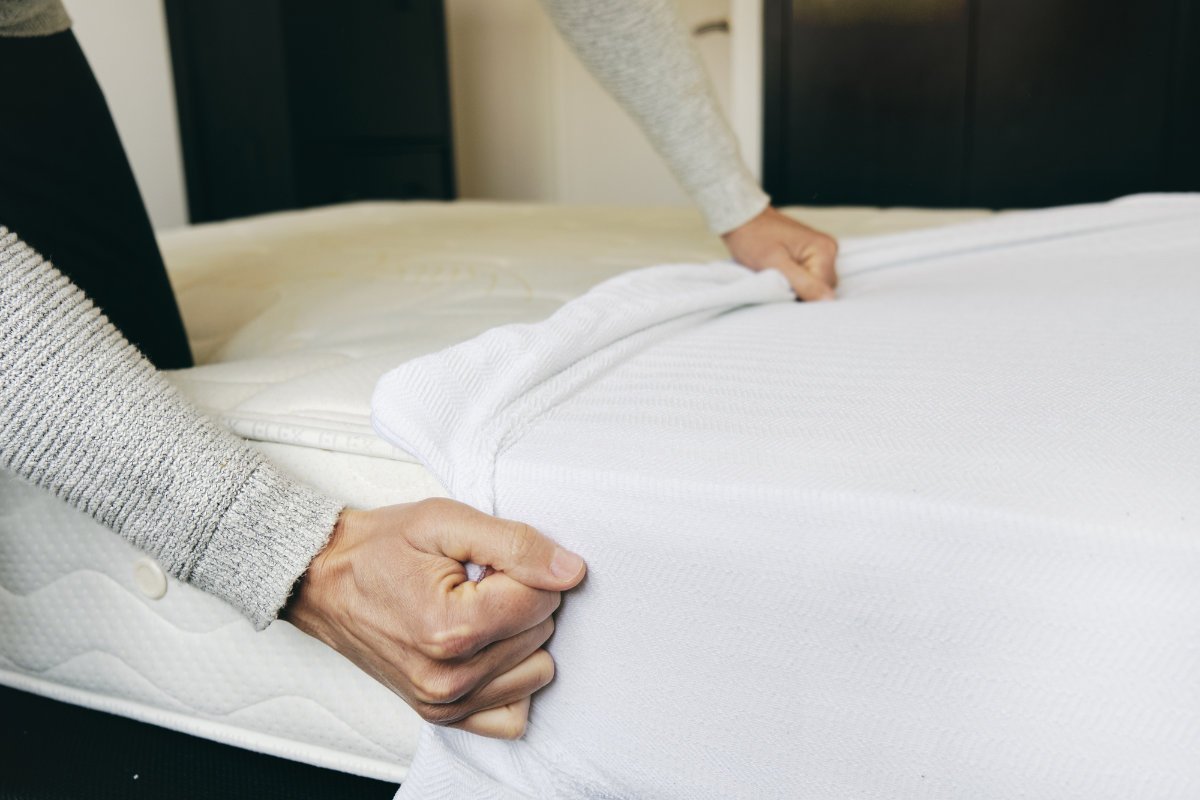
You can clean your bedding efficiently by adjusting your washing machine settings to protect the fabric of your mattress cover. Most covers take about 90 minutes to wash and dry, costing very little in soap and electricity. This task is medium-difficulty because you must handle a large, wet item without damaging the waterproof lining. Before you begin, check the care label on your specific cover to ensure it allows machine washing.
Supplies for your mattress cover

You need a clear space to work and the right cleaning agents to keep the cover safe. Avoid using harsh chemicals like bleach or heavy-duty degreasers, as these strip the polyurethane backing that makes modern protectors waterproof.
| Item | How much | Why it’s needed | A substitute |
|---|---|---|---|
| Mild detergent | 1/4 cup | Cleans without damage | None — don’t swap |
| Cold water | Full cycle | Prevents fabric melting | Warm water, if labeled |
| Large towel | 1 unit | Absorbs excess moisture | None — don’t swap |
| Drying rack | 1 unit | Safe air drying | Low heat dryer setting |
| Mesh bag | 1 large | Protects outer fabric | None — don’t swap |
If your cover features a visible tear or a peeling inner layer, stop immediately. Washing a compromised protector will cause the backing to disintegrate entirely in the machine, leaving you with a clogged filter and a useless cover.
Most people make the mistake of using fabric softener to keep the cover feeling soft. This is a costly error. Softeners leave a waxy residue that clogs the pores of the fabric, effectively killing the breathability you paid for. If you notice the cover feels hot or clammy at night, you have likely used too much soap or softener in the past. Strip the buildup by running an extra rinse cycle with a half-cup of white vinegar.
Preparation before you start
Clear your laundry room floor to give yourself enough room to fold the heavy, wet cover later. A clear four-by-four-foot square is the minimum space needed to maneuver the fabric without dragging it across a dirty floor.
Zip the mattress cover completely shut before you put it into the machine. An open zipper acts like a hook, catching on the drum or tearing the delicate mesh of the cover during the spin cycle.
Check the manufacturer’s care label to see if your specific material allows machine cycles. Some waterproof backings crack under high heat. If the label is missing, assume a cold-water cycle is required to preserve the integrity of the polyurethane layer.
If you find a large stain, pre-treat it with a small amount of liquid detergent and let it sit for exactly 10 minutes. Waiting longer risks the detergent setting into the fibers, while a shorter window fails to break down organic oils.
Never use bleach or fabric softener. These chemicals strip the waterproof membrane that protects your mattress from spills. If you use them, you’ll notice the cover losing its liquid-repellent properties within three washes. If the cover feels sticky or tacky to the touch, you have already compromised the membrane and should replace the item.
Steps for washing your mattress cover in a machine
- Place the zipped mattress cover into the washing machine drum by itself to ensure the machine stays balanced during the spin cycle.
- Add 1/4 cup of mild liquid detergent to the dispenser, ensuring you don’t use more than this amount to avoid soap residue buildup.
- Select the delicate or gentle cycle on your machine, as this uses lower agitation speeds that prevent the waterproof lining from tearing or separating.
- Set the water temperature to cold, which is essential because hot water can melt the polyurethane layer found on many mattress protectors.
- Start the cycle and wait for the machine to finish, which typically takes 30 to 45 minutes depending on your specific washer model.
- Remove the cover immediately once the cycle ends to prevent musty smells from developing in the damp, folded fabric layers.
- Lay the cover flat on a clean, dry towel to soak up excess water, or hang it over a sturdy drying rack.
- If you must use a dryer, set it to the lowest heat setting or “air fluff” for 20 minutes to prevent the backing from overheating.
Checking the results
Your mattress cover is clean when it smells neutral and feels completely dry to the touch on both sides. If you notice damp spots or a lingering odor, the cover needs another rinse cycle to remove trapped soap. Don’t put a damp cover back on your bed, as this creates a perfect environment for mold to grow between the mattress and the protector.
If the cover feels stiff or crunchy, you likely used too much detergent or high heat during the drying phase. To fix this, run a second rinse cycle with only water to clear the soap. If the waterproof backing shows small cracks or peeling, the cover has reached the end of its life and will no longer protect your mattress from liquids.
Check the backing by holding it up to a bright light. If you see pinprick holes or light shining through the membrane, the barrier is compromised and must be replaced immediately. If your cover is aging, perform this light test every time you wash it. If the fabric feels tacky or sticky, the waterproof layer is melting and will likely stick to your mattress fabric, causing permanent damage to the mattress surface.
Troubleshooting your wash
| What happened | Why | What to do |
|---|---|---|
| Zipper stuck | Dirt buildup | Scrub with toothbrush |
| Cover still wet | Unbalanced load | Re-spin at high speed |
| Soap residue | Too much soap | Run extra rinse cycle |
| Musty smell | Too slow drying | Air dry in sun |
| Tearing | High spin speed | Use delicate cycle only |
If your zipper remains jammed after cleaning, rub a graphite pencil lead along the teeth to act as a dry lubricant. Avoid oils, which attract grime and ruin fabric.
When a load stays soaked, check if you mixed heavy items like towels with lighter linens. If the machine vibrates violently during the spin, stop the cycle immediately to redistribute the weight. A balanced drum prevents internal sensor errors that shut down the spin early.
For soap residue, use half the recommended detergent amount if your water is soft. Hard water requires more soap, but you should see no suds in the final rinse.
If you smell mildew, the moisture is trapped in the drum seal. Wipe the rubber gasket dry after every use and leave the door cracked open. If the fabric itself smells, soak it in a half-cup of white vinegar before the next wash. Skip fabric softeners, as they leave a film that traps odors.
Frequency of cleaning
You should wash your mattress cover every two to three months to keep it hygienic. This schedule changes based on two main factors: how often you have pets on the bed and if you suffer from seasonal allergies.
If you have pets that sleep on the bed, you should wash the cover once every month to remove dander and hair. If you have severe allergies, a monthly wash is also necessary to keep dust mites from settling in the fabric.
If you notice a spill, spot clean it immediately rather than waiting for your next scheduled wash date. Use a damp cloth with mild detergent, but avoid harsh scrubbing. Vigorous rubbing can fray the protective membrane, which creates tiny gaps where liquids can seep through to the mattress foam. If you see visible yellowing or persistent odors after a standard wash, the cover has likely reached the end of its lifespan and requires immediate replacement.
Frequently asked questions
Can I wash a waterproof mattress cover in the machine?
Yes, you can wash a waterproof cover in the machine as long as you use a gentle cycle and cold water. Always check the care label first, because some materials are sensitive to the agitation of a standard laundry cycle. If the label says “hand wash only,” don’t use a machine, or you’ll risk destroying the waterproof membrane.
How long does a mattress cover take to dry?
A mattress cover typically takes 2 to 4 hours to air dry completely, depending on the humidity in your room. If you use a dryer on a low-heat setting, it may take about 40 minutes to finish. Always ensure the cover is 100% dry before placing it back on your bed to prevent moisture from damaging your mattress.
Is it safe to use bleach on a mattress cover?
No, you should never use bleach on a mattress cover because it destroys the waterproof backing. Bleach is a harsh chemical that causes the polyurethane layer to become brittle and crack over time. If you have a tough stain, use a small amount of mild liquid detergent instead of harsh whitening agents.
What happens if I use hot water?
Using hot water often ruins the waterproof layer by causing it to melt or separate from the fabric. Once this lining is damaged, the cover will no longer stop liquids from soaking into your mattress. Always stick to the cold water setting to maintain the integrity of the material and keep your mattress protected.
Does it matter if I use fabric softener?
Yes, fabric softener is harmful because it leaves a waxy residue that clogs the pores of the waterproof material. This coating prevents the cover from breathing properly and can trap heat, making your sleep less comfortable. You should skip softener entirely to ensure the cover lasts as long as possible.
How do I know if the waterproof backing is ruined?
You can tell the backing is ruined if you see visible cracks, peeling, or if water beads up and then soaks through the fabric. A healthy cover should repel water completely without any absorption. If you see signs of damage, you must replace the cover to keep your mattress safe from spills and stains.
Conclusion
Keep your mattress cover in good shape by storing it in a cool, dry place when it isn’t in use. Avoid folding it while it’s still slightly damp, as this leads to odors that are very hard to remove. If you follow these simple care steps, your protector will last for several years of regular use.