

You should wash a duvet cover every one to two weeks, assuming you sleep in the bed nightly and don’t use a top sheet. If you leave your cover for a month or longer, skin cells, oils, and dust mites will accumulate in the fabric. This buildup can lead to skin irritation or trigger allergies in sensitive people. For those who use a top sheet, you can stretch this interval to three weeks, but waiting longer than that isn’t recommended for hygiene.
How often to wash your duvet cover
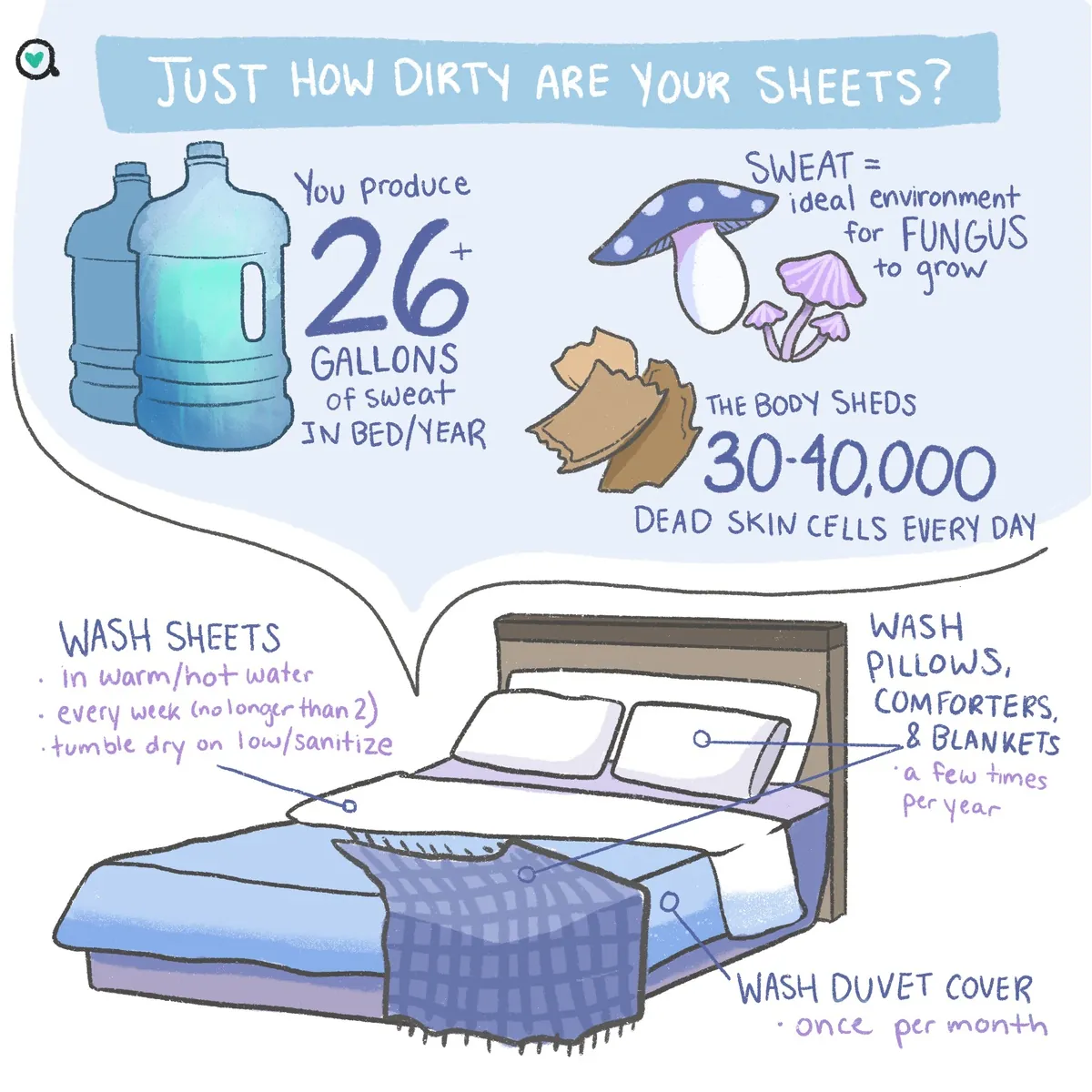
The frequency of your cleaning depends heavily on your habits and the environment of your bedroom. If you have pets that sleep on the bed or if you experience night sweats, you must wash the cover more often to keep the fabric fresh and sanitary.
| How you use it | How often | What tells you it’s due |
|---|---|---|
| Use a top sheet | Every 3 weeks | Visible dust or light odor |
| Sleep nightly, no sheet | Every 1-2 weeks | Faint smell or dull fabric |
| Pets sleep on bed | Every 7 days | Visible hair or dander |
| High humidity climate | Every 10 days | Musty scent or damp feel |
| Night sweats occur | Every 3-5 days | Stained fabric or heavy odor |
Most people make the mistake of ignoring the pillowcase, which collects oils and dead skin cells far faster than the duvet cover. If you wake up with breakouts or congested pores, swap your pillowcase every three days regardless of your main bedding schedule.
Use the “sniff test” as your final arbiter. If you catch a faint, sour scent when you first pull back the covers, bacteria have already begun to colonize the fibers. Run your bedding through the hottest water cycle recommended on the care label to help reduce dust mites and allergens.
Consequences of waiting too long
Skipping your laundry routine causes a buildup of organic matter that you can’t see but will certainly experience. First, your cover will start to trap body oils and sweat. These substances act as a magnet for dust and dirt, which makes the fabric look dull and feel slightly sticky to the touch after about two weeks of continuous use.
If you continue to wait beyond three weeks, the environment becomes ideal for dust mites. The moisture from your body also encourages the growth of bacteria, which may lead to an unpleasant, musty odor that lingers in your bedroom air.
After several months of infrequent washing, the fabric fibers themselves begin to degrade. The oils and skin cells oxidize and become deeply embedded in the weave of the material. This makes the cover harder to clean, often requiring harsher detergents or higher heat settings that can weaken the threads.
Eventually, you may notice the fabric turning yellow or gray, especially in light-colored covers. If you’re unsure about your specific material, check the care label inside the hem; it will list the maximum temperature and cycle type allowed for your specific fabric.
Signs your bedding needs a wash
A lingering musty odor indicates that sweat and bacteria have settled into the fabric fibers. If you notice this scent even after a room has been aired out, the bedding requires a hot water cycle to neutralize the organic buildup.
Visible surface dust suggests the cover is holding too much debris. If you see gray particles when shaking it, you’re likely breathing in skin cells and dust mite waste throughout the night.
Itchy or irritated skin signals that dust mites or trapped sweat are rubbing against your body. If you wake up with unexplained rashes, switch to a hypoallergenic detergent for your next wash.
Dull or discolored fabric happens when body oils coat the fibers. If your white sheets appear yellowed, they’re past the point of a standard rinse.
Congestion upon waking often stems from inhaled allergens trapped in the weave. If you feel stuffy every morning but clear up by noon, your bedding is the primary culprit.
Stiff fabric texture means saturation. If the material feels heavy or rough, it’s time for a deep clean.
Effort required for each cycle
Washing your bedding takes about 15 minutes of active effort, though the machine does most of the heavy lifting. You must first remove the cover, which involves unbuttoning or unzipping the closure and pulling the duvet insert out. If you have a large king-sized cover, this can be physically demanding. Once it’s off, you should check the label for specific heat settings, as high heat can shrink certain natural fibers like cotton or linen.
If the fabric feels stiff or brittle, stick to a cold-water cycle to preserve the integrity of the weave. Using hot water on delicate cotton blends often leads to permanent shrinkage that prevents the cover from fitting back over the insert.
The actual washing time depends on your machine’s cycle, but most standard loads take between 45 and 90 minutes. You’ll need to use a standard detergent, and if you have sensitive skin, you should pick a fragrance-free option to avoid irritation. Drying is the most time-consuming part, as duvets are heavy and hold moisture in their corners. You might need to pause the dryer halfway through to shake out the cover, which prevents the corners from staying damp.
If your dryer lacks a moisture sensor, set a manual timer for 40-minute intervals to check for clumping. Failing to redistribute the fabric allows the center to remain wet, which can lead to a musty odor.
The cost of this task is minimal in terms of money, but it demands your time and space. If you have a small machine, you might find that the cover doesn’t wash properly because it lacks space to move. In that case, you should take it to a laundromat with larger industrial machines to ensure it gets clean.
Habits to keep covers fresh longer
Use a top sheet to create a protective barrier between your body and the duvet cover. This simple layer captures the majority of skin cells and body oils, meaning you only need to launder the heavy cover once a month instead of weekly.
Shower immediately before climbing into bed to remove the day’s buildup of sweat and lotions. If you skip this, those microscopic residues act like glue, trapping dust deep within the fabric fibers.
Pull the covers back completely every morning to expose the sheets to air. If you make the bed immediately, you trap the night’s residual heat and humidity inside, which invites dust mites.
Shake the duvet vigorously every morning. This mechanical action dislodges loose debris before it settles. If you notice a faint, sour smell, it’s already too late; the fabric has absorbed too much moisture. Wash it immediately.
Frequently asked questions
Can I wash my duvet cover with my sheets?
Yes, you can wash them together if your machine is large enough to handle the combined weight. Ensure you don’t overload the drum, as the items need room to move to get clean. If the machine is packed too tightly, the water and soap can’t circulate, leaving your bedding dirty despite the wash. Check your machine’s manual for the maximum weight limit to avoid damaging the motor.
Is it safe to use hot water on every cover?
No, you should only use hot water if the care label specifically allows it for your material. High heat can shrink cotton or damage delicate synthetic fibers, leading to a cover that no longer fits your insert. If you’re unsure, stick to warm or cool water, which is safer for most fabrics. Always check the manufacturer’s care tag, as it contains the precise temperature limits for your specific item.
How do I stop the duvet from bunching inside the cover?
You can use corner ties or duvet clips to hold the insert in place during use. These small fasteners attach the corners of the insert to the inside corners of the cover, preventing the heavy material from sliding down. If your cover doesn’t have ties, you can sew simple fabric ribbons into the corners yourself to create a secure anchor.
Why does my cover smell after only a few days?
Your cover likely smells because of high humidity in your bedroom or because you’re sweating at night. If the air in your room is damp, moisture remains trapped in the fabric instead of evaporating, which feeds odor-causing bacteria. Try using a dehumidifier in your bedroom or opening a window during the day to improve airflow and keep your bedding dry.
Does the material of the cover change how often I wash it?
Yes, synthetic materials like polyester often hold onto body oils more than natural fibers like linen or cotton. Because these materials aren’t as breathable, sweat stays on the surface, requiring more frequent washing to prevent odors. Linen is naturally more resistant to bacteria and moisture, which may allow you to go an extra few days between washes compared to synthetic blends.
What happens if I never wash my duvet cover?
If you never wash it, the accumulation of skin cells, dust mites, and bacteria will eventually cause skin breakouts and respiratory issues. The buildup of oils will also cause the fabric to discolor and develop a permanent, stale odor that’s very difficult to remove. Over time, the dirt acts like sandpaper on the fibers, which causes the fabric to become thin and eventually tear.
How long does it take for a duvet cover to dry?
A standard dryer typically takes 60 to 90 minutes to dry a duvet cover. Drying time depends on your machine’s heat setting and the fabric material, as synthetic covers dry faster than heavy cotton or linen. If corners remain damp after the cycle, hang the cover to air dry for an hour.
Conclusion
Keeping your bedding fresh doesn’t have to feel like a chore. If you aren’t sure when you last tackled the laundry, go ahead and strip the bed today. You’ll sleep much better tonight knowing your space is clean, cozy, and ready for a restful night of dreams.