

You can use foam rollers or dedicated furniture grips to keep sofa covers in place by securing them firmly into the crevices of your cushions. These simple tools prevent the fabric from shifting when you sit or stand. If you have a leather sofa, you’ll need rubberized shelf liners to add friction, as fabric covers slide more easily on synthetic surfaces. This method works best for anyone who wants a tidy living room without needing to adjust their slipcovers daily.
Items to keep sofa covers in place
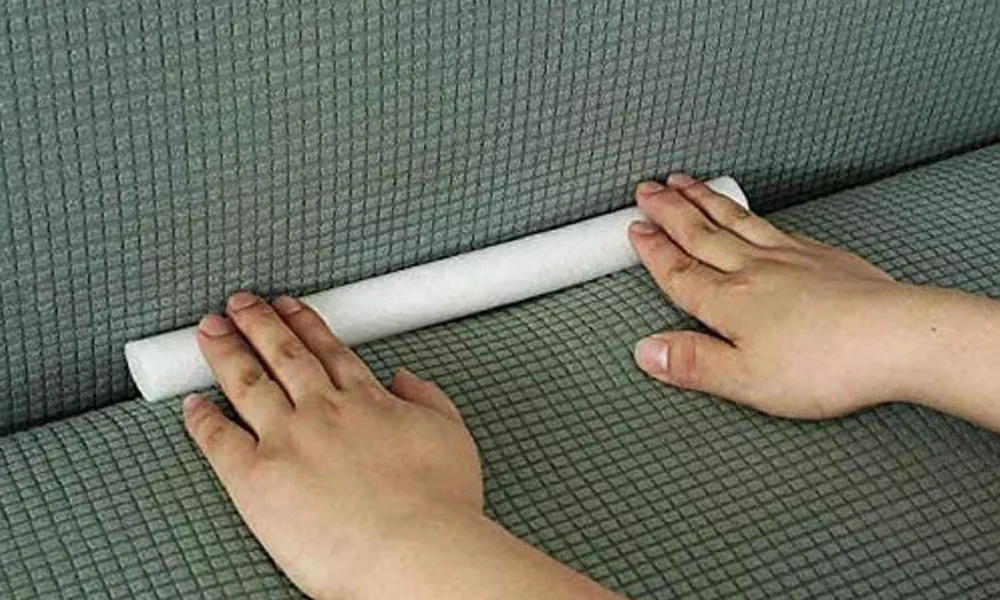
To get the best result, you should gather a few basic items before you start. Having the right tools ensures your cover stays tight and doesn’t bunch up after a few uses.
Foam upholstery rollers are long, flexible cylinders that push deep into the gaps between cushions. Use at least one roller per seat gap to prevent the fabric from pulling loose when someone sits down.
Non-slip furniture pads are rubber mats that sit between the sofa and the cover to stop sliding. If your sofa is leather or vinyl, skip the pads and use rubberized shelf liner instead; it provides a higher coefficient of friction on slick surfaces.
Upholstery twist pins are small, clear-headed pins that screw through the fabric into the sofa frame. Use these only on fabric-covered frames, as they will leave permanent holes in wood or leather. If you have a wooden frame, avoid pins entirely and rely on elastic furniture clips. These attach to the underside of the sofa to pull the cover tight across the frame.
Measuring tape is essential to ensure your cover size matches your sofa dimensions before installation. Measure the widest point of the backrest and the total length of the seat cushions. If your measurements fall within two inches of the manufacturer’s maximum, size up to avoid tearing the seams.
You can find these items at most home improvement stores or online retailers. If you lack professional clips, heavy-duty safety pins offer a temporary fix, though they often snag delicate weaves. Avoid using pins if you have small children or pets, as these fasteners can work loose over time and pose a significant choking hazard.
Steps to secure your slipcover
- Remove the existing cover and clean the sofa surface to ensure there’s no dust or debris that might cause the fabric to slide.
- Lay the cover over the sofa, smoothing it out from the center toward the outer edges to remove large wrinkles.
- Tuck the excess fabric deep into the crevices between the seat, back, and arms of the sofa.
- Insert foam rollers or rolled-up magazines into these crevices to lock the fabric firmly in place.
- Attach elastic clips to the corners of the cover underneath the sofa frame to maintain tension across the entire surface.
- Secure the back and armrests with upholstery twist pins if the fabric continues to shift after you sit down.
- Smooth the entire cover one final time to ensure a professional, tight fit.
Tip: If your sofa has T-shaped cushions, tuck the fabric around the corners of the T first before securing the rest of the seat. Careful: Don’t pull the fabric so tightly that it tears at the seams; leave just enough slack for the seams to sit naturally. If you’re working with antique furniture, consult a professional restorer before using pins, as they can damage historic wood frames.
Adjusting for different sofa types
The effort required to keep a cover stable depends on the material of your sofa and the frequency of use in your home.
| Sofa Surface | Time Needed | Effort Level | What to Watch |
|---|---|---|---|
| Fabric Sofa | 10 Minutes | Low | Look for bunching |
| Leather Sofa | 20 Minutes | Medium | Check for slippage |
| Velvet Sofa | 15 Minutes | Medium | Watch for friction |
| Deep Cushions | 25 Minutes | High | Ensure deep tucks |
Leather surfaces require silicone-backed pads or high-friction grip strips to prevent the cover from migrating under body weight. If you notice the cover sliding within an hour of sitting, add a non-slip rug pad between the cushion and the fabric.
Velvet poses a unique challenge because the nap of the fabric creates a directional slide. Always orient your cover so the grain runs downward; this uses the natural texture to resist gravity.
Deep cushions demand extra tucking material. If your sofa has a seat depth exceeding 24 inches, you must use rigid foam noodles or specialized upholstery grippers. Without these, the fabric will inevitably pool in the center.
It’s always safer to start with minimal tension and add more clips or pins only if the cover continues to move. Over-tightening early on can cause the fabric to stretch or pull away from the anchor points. If you see the fabric seams pulling taut or whitening at the stress points, loosen your anchors immediately to prevent permanent tearing.
How to tell you did it right
A properly secured cover should look smooth, with no loose fabric hanging off the edges or pooling in the center of the seat. When you stand up after sitting, the cover should return to its original position without needing manual adjustment. If the fabric pulls out of the crevices immediately, it means your anchors aren’t deep enough or the cover is too small for the sofa frame.
Test the tension by running your palm firmly across the seat. If you feel a hollow gap between the fabric and the cushion, the cover is too loose. You need at least three inches of excess fabric tucked into every seam to ensure the material stays anchored under body weight.
This shifting often happens because the fabric lacks enough surface area to grip the cushion gaps. You can prevent this by using longer foam rollers that span the entire length of the seat crevice. Always prioritize using non-damaging tools like foam grips before resorting to metal pins that penetrate the fabric.
If you find yourself readjusting the cover more than once a week, you have likely missed the frame’s structural anchor points. Look for the rigid wooden base beneath the cushions. If you can’t reach it, your cover is likely sized for a different silhouette. In that case, adding extra fabric strips to the underside will provide the necessary weight to keep the cover taut.
Maintaining your sofa cover standards
Most manufacturers recommend keeping furniture covers clean to prevent the buildup of oils and dust, which can make the fabric slippery. You should remove and wash your covers according to the care label instructions provided by the textile maker. If you use upholstery pins, remove them before washing to prevent damage to your machine or the fabric.
Check your anchors every month, as regular use naturally loosens the hold of foam rollers and elastic clips. If you have pets, you may need to check these connections weekly, as jumping and movement will speed up the process of the cover coming loose. For heavy-duty industrial covers, follow the specific tension guidelines provided by the upholstery supplier to ensure the material maintains its shape.
If the fabric feels tacky or begins to pill, stop using chemical cleaners immediately. These agents often strip the protective finish, leaving the fibers vulnerable to permanent stains. Switch to a handheld vacuum with a soft brush attachment instead.
When reattaching, ensure the seams align perfectly with the frame corners. If the fabric bunches at the center, you have likely pulled the anchor too tight. Loosen the tension until the material lays flat against the cushion. A cover that remains taut for too long will eventually lose its elasticity, requiring a complete replacement. Always prioritize a smooth fit over extreme tightness.
Alternative ways to secure fabric
Using non-slip rug pads
You can cut a large rug pad to fit the seat area of your sofa. Place this under the cover to create a high-friction barrier. This is highly effective for leather sofas where fabric covers struggle to stay put.
Trying heavy-duty adhesive velcro
Apply self-adhesive velcro strips to the sofa frame and the inside of the cover. This creates a permanent bond, though it may leave residue on the furniture frame if removed later.
Choosing custom-fit slipcovers
Custom covers are made to the exact measurements of your specific sofa model. They often include built-in ties and heavy elastic bands, which significantly reduce the need for extra grips or pins.
Frequently asked questions
How long do foam rollers stay in place?
Foam rollers typically last for several weeks before they need a quick adjustment. This assumes normal daily use in a household; if you have children or active pets, you should check the stability of the rollers every few days to ensure they haven’t popped out of the cushion gaps.
Is it safe to use upholstery pins on a leather couch?
No, you should never use upholstery pins on a leather sofa because they will create permanent holes in the material. Instead, use non-slip rubberized shelf liners or silicone-backed furniture pads to increase friction without causing any physical damage to the leather surface.
Can I use pool noodles to hold covers?
Yes, pool noodles are an excellent, low-cost alternative to professional foam rollers for deep sofa crevices. Simply cut the noodle to the length of your cushion gap and push it down firmly; it provides the same tension as a store-bought roller while being soft enough to sit on comfortably.
How do I stop the back of the cover from falling?
You can stop the back from slipping by using elastic furniture straps that hook under the sofa frame. These pull the fabric downward, keeping the back section taut even when people lean against it, provided the straps are adjusted to match the height of your specific sofa.
Why does my cover always slide off?
Your cover likely slides because the fabric is too slippery or the cover is slightly too large for your sofa frame. To fix this, tuck in extra fabric or use a combination of non-slip pads and foam rollers to increase the grip between the cover and the sofa cushions.
How often should I re-tuck my sofa cover?
You should re-tuck the cover whenever you notice it beginning to bunch, which usually happens once or twice a week for most households. If you find yourself doing this daily, it’s a sign that you need to add more securing tools like corner clips or additional foam rollers to keep the fabric held firmly in place.
Conclusion
Keeping your sofa cover in place is a simple task that improves the look and comfort of your furniture. By using the right tools and checking your anchors regularly, you can enjoy a neat, wrinkle-free sofa with very little effort.